Showing posts with label Inquiry. Show all posts

Friday, 27 March 2015

Teaching through Inquiry

There has been a lot said about Inquiry in the classroom and you can take whatever side you want. However, for me it is such a fundamental component of any primary classroom.  This is because in my opinion when we are first learning a new skill it is through inquiry that we learn it. Very rarely is it through a lecture. In fact even as an adult when acquiring new skills do we do it through lectures but through mentor-ship and research.

For me teaching is all about the inquiry process. And teaching through inquiry allows you to meet all the minds in the classroom.

Now before I get too far in my post maybe I should articulate what I mean by inquiry, as I know there are many variations of the process out there.

Throughout my teaching career my journey through inquiry has undergone a lot of changes. When I first started teaching I thought what I did was inquiry. I would plan lessons that were hands-on, engaging, thought provoking and had plenty of talk built in. Students would often be engaged with problems, experiments or activities that required them to think, problem solve and then discuss.  Now I know many of you are thinking but isn't that inquiry and you are correct.

According to Google, inquiry is:

in·quir·y
ˈinkwərē,inˈkwī(ə)rē/
noun
  1. an act of asking for information.

However, what I was realizing was that I was the one doing the inquiring. I was the one that set the stage for student learning, I was the one that debriefed and discussed the learning.  I felt that this type if inquiry was more about me and less about the students. So I changed. I changed my thinking to be more student driven. My units often start with provocations, which then lead to questions, which then in turn lead to students recommending further learning. I still insert my thoughts but now they are developed through asking questions and using student talk to deliver the observations and learning.

Now why do I love inquiry so much:

The first is that I love it engages the students in the learning. They feel situated and invested. They want to learn because they like to learn. I even have students going home and asking their parents to go to the library or go and research because they want to find more things out about the topic they learn in school. I don't know about you but this is truly amazing to hear.

Second through inquiry you really understand the nature of your students learning. Because I am not lecturing and then asking students to complete a test where they regurgitate the information I just spewed out at them they have to rely on their own thinking and schemas. You also get to question them and conference more on a regular bases and because of this you see their growth and understanding. Assessment is a breeze because you have almost too many observations and conversations to choose from.

Finally, I look at this world around us and I think that the jobs I am preparing my students for don't even exist yet. Now you are right some jobs will exist put for the most part the skills that these students need will not. However, what will is the ability to problem-solve, be adaptable, creative, and flexible thinkers.

I recently came upon this:
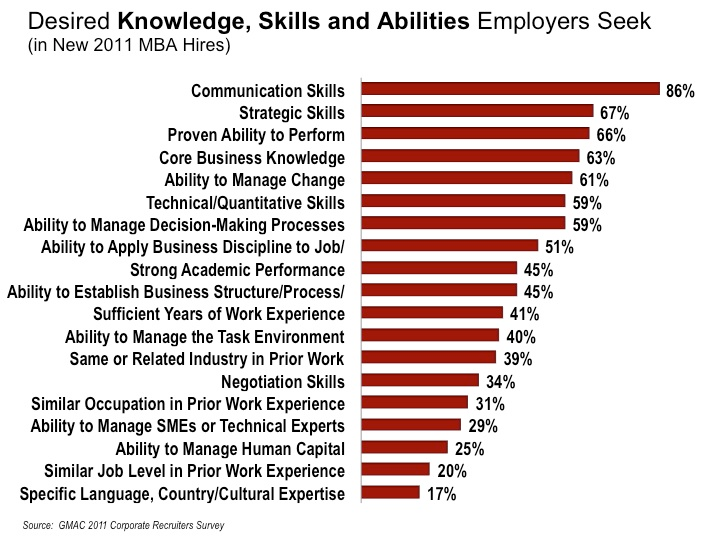

I love the fact that the first three skills are soft skills, one that you really cannot learn from reading a textbook or listening to someone tell you things. They are skills that take time to develop and through multiple experiences and situations. In my opinion inquiry does this. 

Now these are just my opinions but ones that have been grounded in my practise. They are observations of my growth and reflection. Would love to hear your thoughts?

What do you think of inquiry?

Do you like it? If so why?

What are the benefits? Drawbacks?

I would love to hear your opinions.


Monday, 1 September 2014

Teaching through Inquiry: A reflection on a reflection Part 2

I recently came upon a post by my friend Aviva (@avivaloca). In her blog (http://bit.ly/1zZi78y) she was reflecting on teaching through inquiry. I started to respond in her comments but was thinking of so much more to write.  In fact it even made me split the blog post into two posts for sake of space and time for readers.  

This is the second part which in my opinion focuses more on the teaching parts of Inquiry.  The first focuses on the planing portions. Though to be fair they often blur together.

Here is Aviva's questions in regards to teaching: 

  • How does this impact on classroom design? What role will students play in this design?
  • How does this impact on scheduling and specialist teachers? If students are on rotary, I wonder how the teachers can work together to create longer blocks of learning time even when they don’t naturally exist.
  • How do we improve our questioning skills? How do we get comfortable with “wondering,” and not always having the answer in mind?
  • How do we get better at understanding curriculum expectations and seeing the links between expectations?
  • How do we balance “student interests” and “curriculum expectations?” What does this balance look like?
  • How are teachers supported in this shift towards inquiry?
  • How do we gain a shared understanding of what inquiry means (helping to ensure the success of the approach)
1) Classroom Design:

I am not the best at design but teaching through inquiry has really played into my hand. Because Inquiry is a lot about student learning so is classroom design.  My classroom is built around my students. My walls are their work, my tables are just that tables.  Students are free to work where ever they want. 


2) Schedules: 

This is so important.  I think that for Inquiry to really happen schedules have to be in place for it to happen.  This comes through admin and staff working together to really create something special for the students.  inquiry cannot happen in one period blocks of time.  Their needs to be a lot of creativity, planning and thinking on all to make it happen.


3, 4) Teachers:

I have clumped these altogether because I think they go hand in hand; however, the answer is a politically sensitive one.  In order to have better questioning and understanding of the curriculum teachers need to know their stuff.  Their has been numerous debates over the importance of inquiry and its failures.  Where it does fail is when as teachers we do not know enough to help our students learn.  We cannot let them just wonder the universe searching for answers.  Their needs to be a balance between skill and exploration.  I always use the idea of Wayne Gretzky (though I know that this may create debate in itself).  Gretzky became great because he had skill and he practise but he also had coaches along the way that shaped and modeled his abilities.  They told him when he was doing something wrong at the right times in his career.  These coaches had to know their stuff to help him improve.  I couldn't go into the rink and say fix your shot, your pulling to the right because I would have no idea what to do.  We also don't ask a brain surgeon to come and do a heart transplant. He may fully understand what to do but he doesn't have the right skill for the task.  Teachers are the same.  To improve our questions and our ability to learn we ourselves have to learn.  

I recently completed my Masters of Education in the effects of teachers Questions on students learning in Fractions.   I had to do a lot of reading, and a lot of learning.  It is because of this learning that I was able to hone my craft in asking questions.  I am in no way an expert (in my opinion) but through practise, more reading, watching others, learning, and reflecting I am always getting better. This is exactly what teachers need to do.

I understand that their is a time factor but it is time well spent.  Until we get our profession (all of us) willing to do this than Inquiry will not be fully implemented.

6 and 7) Teacher Support: 

I am skipping five for a moment.  Teachers need support, that is plain.  If the boards and the ministry want inquiry to happen than teacher training is a must.  How is this to be done.  I think that we really need to rethink our professional development days and staff meetings.  Give time for teachers to explore and learn inquiry through inquiry.  I always think it is funny when we teach that inquiry is the vest way yet we disseminate information in a lecture style.  It contradicts inquiry.  

Last year I was involved in a Teaching and Learning Project with the government.  I was given funding to run a school wide math focus on problem solving.  We are in no way fully school wide but we made huge strides.  How was this obtained: 

1) It made us as teachers talk
2) Instructional Rounds became best practice
3) Common Planning
4) Co-teaching, Co-planning, and Co-debriefing

With these four critical components our whole school understands what problem solving is, what resources to use, and some critical questions to be asking through the whole process.  On a whole our staff does two to three problems a unit for inquiry in math.  Our next steps are to continue this and to further implement it.

We can take a note of this small study for a bigger picture.  Implementation will always be slow the more people you have but through these four steps it can be done.  The more conversation the better it becomes. 

5) Student Voice versus Curriculum:

This is a nice way to end this conversation.  I believe that the best part of Inquiry is students get a voice.  Students feel a part of the classroom, even though you are for the most part deciding what is being taught, students are exploring at their pace, with their words and with their ideas.  With Inquiry they are the lesson. Its their questions, their answers and their opinions that drive the discussions and learning.  Sure you had the big idea in place, maybe the activity but it always comes down to their learning.  Be willing to give into this and amazing things will happen.

Once again, these are only my opinions and as Inquiry continues to evolve so will my thoughts.  I love hearing from people so if you have any ideas please share.  Love to hear them.

Teaching through inquiry: a reflection of a reflection Part 1

I recently came upon a post by my friend Aviva (@avivaloca). In her blog (http://bit.ly/1zZi78y) she was reflecting on teaching through inquiry. I started to respond in her comments but was thinking of so much more to write.  I believe a lot in Inquiry and I think that it has a lot of potential to really impact our students.  I also know that there is a lot of misconceptions around inquiry or a feeling that because of it students are falling behind.

I want to first start of by stating that for me Inquiry is probably the best way to teach.  If done right it can offer a perfect balance between students choice and teacher taught skills.  I know in other blog posts I have mentioned how I go about teaching through inquiry but will attempt a short intro here.  In my classroom students solve problems or sort through provocations that all them to explore as a individual, group or class.  As students are exploring, questions and observing I am conferencing with individual students.  Every now and then we stop and ask questions to the whole class.  This allows the learning to be shared and focused.  At the end of the exploration period (which can be longer then a period or day) we have a consolidation time where we bring our findings to the class. During this time I am focusing the talk to the big ideas that I saw transpire.

As I mentioned this blog post is in response to Aviva's questions. Now Aviva had a lot of questions and for the sake of the length of a blog post I have split the conversation into two groups.  The first centers on planning needs and part two will center on the teaching needs.  Though in all truth they go hand in hand.

In her blog Aviva asked these planning centered questions: 

  • How does this impact on long-range planning (i.e., we need to teach all of the overall expectations, but could student wonders impact on how and when this information is taught)?
  • How does this impact on the use of tests and culminating tasks? How “formal” do assessment tasks need to be for students to show us what they know?
  • How does this impact on the marking? Will a focus on inquiry also eventually lead to a provincial change in evaluation methods (i.e., moving from grades and percents to specific anecdotal comments, such as the ones used on the Full-Day Kindergarten Report Cards)?
  • How does this impact on homework? How do we inspire students to want to learn outside of school, and how do we show parents the value in learning that does not rely on a textbook or black line masters?
Let's get into answering Aviva's questions:

1) Long Range Plans: 

I believe that you still need to have a set of long range plans.  In Ontario we have a curriculum that must be followed.  Even though students are exploring and observing, their is still is guidance that a teacher must follow.  Not only this but having long range plans allows me to keep in mind what subjects, themes and big ideas I need to blend in.  I also post these long range plans for my parents to follow.  If they want to help at home (which I highly encourage) they know roughly what subject matter we will be focusing on. Now even though I have long range plans they often focus on curriculum big ideas, problems and often have questions that I will be asking the kids.  My plans are not focused on the specific expectations because I know that through problem solving and inquiry these will be covered.  I also find that my problems cover many various expectations not just the subject that I am teaching.  However, without my long range plans I wouldn't be able to make those connections or be able to comment/ communicate to parents what is happening in the classroom.

2) Tests and Culminating Tasks:

This for me has undergone the most transformation in my teaching career.  At first I was yeah we need tests or their has to be some sort of culminating task but to be honest as the years have progressed I have used less and less of these tasks for assessments.  As students are working on problems I am always tweeting, conferencing and recording notes.  I have found that I actually understand my students more than I ever did. So much so that one day I was giving a test and as I looked around I knew what their answers would be before I gave it to them.  I also new what their next steps would be, what errors they would be making or what questions to ask them.  This made me think first was this assessment necessary and why was I doing this.  Instead of wasting two periods on a test I now make it a learning experience and use the time to discuss the big ideas with my class.  Now all students benefit from the assessment not just the ones who got it right.  In addition, I know that most test or tasks were designed for parents to know what their child is doing in class.  I now assess pretty much everything (just in different ways).  My notes are sent to parents through duo-tangs, notebooks or rubrics.  With GAFE my students and parents can see comments in real time for writing.  It is this formative feedback that is the most rich and engaging.  In fact if my students or parents don't know what mark they are getting on their report card than I haven't really done my job right or communicated effectively.

3) Assessment: 

Marking is way different.  Before marks where from tests or assignments.  Now I find that everything to some degree is marked; definitely commented on. I now have a general assessment form that I use through GAFE, this allows me to have a record of my conferences and comments throughout the year.  I also believe that assessment belongs in the hand of the students.  Through constant conferencing and talking my students should know where they are on the landscapes and trajectories that we make together.  They should know their next steps and goals.  We also do a lot of goal setting and planning to help them learn how to grow.  This again helps with parents because the students are always thinking about their learning and talking about it.  I also have been using social media like twitter and storify to allow parents into our classroom.  By asking questions within the storify it helps parents connect with their child's understanding of the topics learned in class.

4) Homework: 

I have never been a fan of homework.  I don't know if this stems from my own experience with it or not but I find that this (in a traditional sense) does nothing for students learning.  Now don't get me wrong, practise is important.  You can never be great at anything without practise.  But doing mind numbing and senseless worksheets is not practise.  In addition, in elementary much of the research shows that it doesn't help the students in fact it often hinders their learning.  Successful students (in my teaching experience) are the ones that have had experiences to draw upon.  They are the ones that have been read to as a child, done things with their families, play outside or play games.  Their is a lot of learning in the family model.  Students also have their own passions and interests that they should be encouraged to pursue.  In my classroom, reading is the homework.  In fact its not really considered homework as this is a must for success.  I also give one math problem a week and encourage my students to play math games from our bin.  I also have Youtube videos for the students to watch and learn from.  This helps with the teaching when they come back to the classroom.

This has been a hard transition for many of my parents (for my whole career) but I often explain to them about what to they think is valued more in life: knowledge or use of knowledge?  AS they are in the work force who do they want to hire or work for them: Someone who has all the knowledge in the world but doesn't know how to use it or someone who can critically think through the work given to them and problem solve?  This often brings many interesting discussions.  They are also always impressed at the learning that is happening with their child.  I often get: they actually want to come to school! All they can do is talk about what happened today! They are so independent! When this happens I often don't get too many questions.  Now occasionally I have parents who want more, for them I offer this:

I cannot cover everything in the curriculum on my own, many things may be glanced over or skimmed because it is not where the class needs to be.  Please encourage you child to try and learn this on their own and bring it back for the class to learn.  I always give opportunities for students to present their learning and be the teachers in the classroom.  I also mention that as Parents they have every right to teach anything that they want to their students and I encourage it.  Its these experiences that will help them grow and learn together.  All I ask is that they have a growth mindset and not think that what they are learning is the only way.  This also goes for my teaching too.

As inquiry continues students start to learn how to critically think and evaluate the information given to them. This is such an important skill to have.

This brings me to the end of the first part of Aviva's questions.  This of course is only my thoughts and in no way is it a final answer.  That is the best part of inquiry learning, it takes a community of learners to bring about understanding.  I would love to know your thoughts, as I am always rethinking Inquiry in the classroom.  Please share them with your own blog or comment below love to hear them.  And stay tune for part 2, which will probably be posted shortly after this.

Monday, 2 June 2014

My 2ndish attempt at using provocations

I would like to think that I teach through Inquiry.  I really try to keep all of my work about the kids and their thinking; however, I do find myself still leading discussions more than I would like.  Then I learned about provocations.  WOW! I know that I have previously blog about this subject but since that time I have tried to use them more.  Today in science I did just that (at least I hope I did).

Here is what I did:

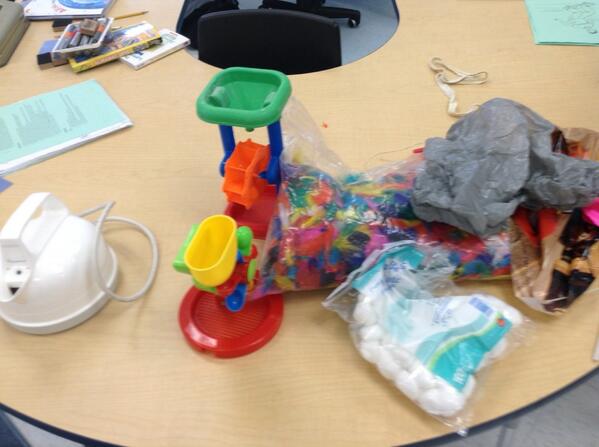
1) I got a bunch of experiments working on air and water

Center 1: AIR


Center 2: Water

Embedded image permalink
(note: some of these items were for other provocations)

Center 3: Water Cycle


Center #4: Pollution


I then broke them into groups had books and iPads at the centers and asked them what do they observe?  Wow, I couldn't believe the talk, the focus, and  the engagement.  Take a look at this shot:


Here the students were so engrossed in what was happening that they didn't even notice me.  They were saying, "cool look its raining!"  They were also using the vocabulary that we have been building before this through our watercraft project.

What did I learn?

1) Inquiry (true inquiry) is allowing planned exploration.  Students really need time to explore and make observations about the subjects.

2) This takes a lot of planning.  I been planning this for some time now (many thanks to my amazing PLN for their help in this).  As I have been planning I had to think about questions, get all of the materials ready and even think about possible misconceptions.

3) True assessment.  I was amazed at what the students had absorbed through previous books, the Watercraft project and our discussions.

4) Its a lot of fun to watch the joy and engagement of true learning

So if you haven't done provocations before, give it ago.  Its a lot of fun and you would be surprised at what you will learn about your students.


Wednesday, 28 May 2014

Water Craft Our new inquiry Part 1

I am writing this blog post as a documentation of a cool new inquiry project that my teaching partner Keri Ewart and myself (though more my teaching partner), called Water Craft.  The purpose of this inquiry is to design  new version  of Minecraft called Water Craft.  The students must include three of the big curriculum expectations:

  1. Assess ways in which the actions of humans have an impact on the quality of air and water, and ways in which the quality of air and water has an impact on living things
  2. investigate the characteristics of air and water and the visible/invisible effects of and changes to air and water in the environment
  3. demonstrate an understanding of the ways in which air and water are used by living things to help them meet their basic needs

Now this project has been a spur of the moment (which to me are the best kind) so we will see how it goes.  The hope is that the grade twos will be designing their own game system that answers these three questions.  So far we have started by introducing our language centers which will give the students opportunities to explore the game, the writing portion and science.  

We have also had the students play inside of the game and discover different components of MineCraft.  The next stage is to start asking guided questions that students will have to answer in order to complete the big ideas and the actual making of a video game.

So what does this project look like:

1) This project is first linked to our science curriculum.  The learning goals of the game is to teach these three big ideas above

2) It is also linked to reading, writing and our language centers.  Students will be researching within their centers about water usage, conservation and characteristics.  Each center is based on building toward the future; designing a game.

3) Lots of exploration.

What was needed to get this type of project started:

1) Lots of planning and forward thinking.  Even though we decided on it at the last minute, my teaching partner and I have had to rethink through our curriculum needs and figure out how to interconnect all of tech into the curriculum.

2) We also had to give our students a lot of exploring time. I have found that whenever you introduce something new for the first time, students just really want to explore, so we did just that.  The first day was all about exploration.  The students played with mindcraft, they read and played the center apps and discussed as they went.  We were also very lucky to have some grad students in from York to help use problem solve and work through playing the game.

3) we gave time to ask questions and answer some of them.  After the student explored on the game, we had them come up with a list of questions that they would have to explore.  The hope was that this would spur more inquiry and make the children think about what they are working towards.


 Each week I hope to document the learning that is happening and reflect on the process.  In the mean time if anyone has any other suggestions we welcome any advice or help.  Stay tuned for more.

Tuesday, 4 March 2014

Problem based in learning in the context of math wars. Thoughts are myp.o.v.


I was recently given an article from Suril Shah (@thrilsuril), a colleague of mine in the peel Board, (http://news.nationalpost.com/2014/02/28/does-discovery-learning-prepare-alberta-students-for-the-21st-century-or-will-it-toss-out-a-top-tier-education-system/) and then later on another article from another colleague Aviva Dunsiger, a teacher in the Hamilton School board (http://www.theglobeandmail.com/globe-debate/canadas-math-woes-are-adding-up/article17226537/ ).  Both articles discuss (or rather reprimand) the notion of “Discovery Math” needless to say I had to respond.

As many of you know from my blog posts, math is a very important passion of mine.  I have in a way devoted my educational career to learning about math education and how it can help transform student learning.  This has gone on for me for the last 9 years of my teaching career and five years before volunteering at an amazing school in Peel.  Over the course of these 14 years the arguments in the above articles have always been happening; so I think it is funny that when Ms Wente mentions that this is a “new faddish fuzzy notion.”  Since mathematics was first introduced into the curriculum in the fifteenth century it has always been a debate over skill versus conceptual understanding.  This debate will always be there all I can give you is fact from experience and from the classroom (which I will say many who write articles in the Newspaper or make policy cannot).

Let me first start of with my own evolution.  Like many of you I was taught with very traditional methods.  My father drilled in me from a young age that fact recall was the most important thing.  I still remember practising for hours on hours flash cards and being randomly asked multiplication questions to see if I knew these facts.  I also remember that my Math class was all in a work book and my teacher sat at the front of the room and wrote many things on the board and then we did questions to practise and show what we learned.  This continued all the way through school and as I got into the high school and eventually University this is what I remember of my Math class.  Did it help?  No, I don’t think it did.  Don’t get me wrong, I did learn math.  In fact Math has never been a hard subject for me (except problem solving).  I was able to work through and memorize what was needed and then when the test came I was able to retell those facts and get an A.  My problems never came until University Calculus.  Here I because I didn’t have a good foundation in Calculus I struggled, in fact I failed. 

Sorry I digress here.  This method of teaching stuck with me, more so because this was all I knew.  During University I changed majors and decided to become a teacher.  I was able to volunteer at an Amazing school in Peel and soon learned Reform Mathematics (what discovery math was called at that time).  I was also fortunate enough to have an Amazing principal who let me question her and learn what reform mathematics was all about.  At first I said the same things that many of these article, and our parents say when they see problem based learning. You have probably heard these before (I know they are in the article):
1)      What is wrong with Rote, it worked for me?
2)      What about facts? There not learning them like I did?
3)      I memorized and got good grades?
4)      They can’t possible learn this on their own?
5)      What do you mean discovery? What is your job then?
6)      You’re the teacher so teach?
7)      This look chaotic, there is no order, how can they learn?
8)      What about the language, seems like more reading than math?
I can go on but they start to sound the same.  During this process I was able to see students truly excel and showcase their learning.  In fact, looking at scores (which is not the end all to be all), the school went from 42% to 93% in that first year in mathematics.  I was also able to reflect on my own learning and how I learn.  This started the ball rolling and has helped me to ask questions back.  Here are a few to think about:
1)      How do you truly learn as an adult learner? 
2)      Do you memorize things and then succeed? Or did you have to make mistakes, go back and relearn or have someone help you through it?
3)      When you are learning do you like to ask questions? Or just sit and receive information?
4)      (my favourite one) As a successful adult how did you become successful? What traits do you like in your employers?
Here are my thoughts to these questions:
I personal learn by doing, struggling, asking questions and then going back to relearn it.  True mastery comes from doing something over and over and over again.  Yes I can see how this backs learning facts, and I am not saying facts are not important, but my learning is in context to the concept not in isolation.  Memorization only works with some things but I still make mistakes no matter what I am doing and then I learn from them.  As for success to me I value students who are free thinkers, creative, adaptable and able to see past just simple direction.  This has been the case even when I was managing people in the private sector in my University jobs.  I don’t think the world can evolve from people who can only follow direction and not think beyond what is on the paper.
With this in mind I began my teaching career.  Here I too continued to question but now I also had to field questions from the general population about my style of teaching.  Here are my responses.
Q: Why is this better than traditional learning?
 A: I hope that I may have answered this above but most students, and adults do not learn through traditional learning.  There are a very few who do and we also have to consider that style but many don’t.  Learning is developmental.  It doesn’t happen in a linear fashion and PBL allows for this to happen.  Learning in PBL also doesn’t happen in isolation from the world, or other subjects.  It is always connected to a context, which helps all students to hold on to something and work with it.  Furthermore, all learners can access PBL, whether gifted or with a learning disability all students can do the problem.  Also, personally, it makes the day go by a lot faster, I enjoy it and so do my students.  Check out this video: http://curriculum.org/secretariat/justice/insights.html for student reflection on what context can do.

Q: You know my kids don’t know facts, why aren’t you teaching them?
A: First and foremost, I want this to be said, “FACTS ARE IMPORTANT!” they must be taught and learned; however, how are we learning them.  Let’s go back to my question back to you.  Can you recall something where pure fact learning has help you be successful?  If yes, no think was it just fact memorization or was it in a context?  Fact knowledge is important and needs to be done.  I prefer to do this through games and mini-lessons.  This allows me to talk about a strategy and have students discuss the pros and cons of the strategies.  The talk focuses the learning.  Check on my previous blog post on it.

Q: “Teachers and Students are learning together” Great so now we have the blind leading the blind!
A: This is the one that bothers me the most.  It bothers me because PBL actually takes more understanding, more planning and a lot more patience then traditionally teaching.  I have almost completed my thesis, in where I researched the impact of my questions on students learning of fractions.  It was interesting to see where I had moments of direct teaching that my students stopped talking.  In fact, they just sat there.  Which is exactly what traditional teaching does, students sit and listen then do.  PBL takes planning.  In another of my posts I talk about five practises that teachers should be following for PBL implementation (http://mrsoclassroom.blogspot.ca/2013/11/blog-post.html ).  Teachers actually need to learn the mathematics and it is through critically placed questions that the learning is brought out.  Students develop at a faster rate through this proper questioning style and can achieve a higher level of understanding.  I have grade twos right now who are learning about equivalent fractions, ratios, division and adding three digit numbers in their head.  It is truly amazing to see what they can do.  But this takes planning on my part.  It takes understanding of learning trajectories and  understanding what students are doing (so you can redirect or push beyond) and understanding the math to be effective in PBL.

Q: Test scores are falling?
A: this might be so but I would caution you on this.  First of all tests are a snap shot of learning at a particular moment in time.  They have a place in assessment.  In my personal opinion a very far place but a place nonetheless.  There are many factors to low test scores: 1) poverty, parents education, home life, social problems that day, being sick, stress, reading level, context, etc. The list is endless.  When we put all emphasis on test we are taking away so many other factors of learning.  I know more about a student from a problem that they solve then by what they can retell me on a test, just a matter of fact.
 I am going to stop here for now as I think I have written more than I ever have in a blog.  This topic is very dear to me and I have heard a lot of the questions in this “Math War.” It will not go away but please don’t take this as a discouragement to stop PBL or even start.  To me PBL is the best way for ALL students to learn.  It gives the teacher the most time for true assessment and understanding of their students needs and next steps.  It allows you to meet all levels of students and be able to get to all of them.  I have and will continue to only teach through PBL (problem based learning).  Love to hear your personal stories, questions or answers to this lovely debate. 

Tuesday, 25 February 2014

Helping students Master Facts

Coming from Junior grades I know that facts are important for students to help them with math.  In addition, I know that learning facts also helps students with solving problems.  However, whenever you talk to anyone this is such a bone of contention.  Some feel that facts are the most important parts of math and some feel they will be learned through problem solving and inquiry.  I tend to lie in the middle of these groups leaning moreso to the inquiry approach.  Don't get me wrong facts are very important to learn and are a critical part of mathematics.  They do help students; however, I also see the other part where students only know facts and cannot apply them to problems.  IN this case facts are harmful to students development because they keep trying to apply rote learning with no understanding.

So with this in mind what is a teacher to do?  I recently came upon some great advice from van De walle's book, Elementary and Middle School Mathematics: Teaching Developmentally.  In his book he has a whole chapter on mastering basic facts.  Van de Walle offers three components to learning facts and none are through strict drill and or quantity of drilling facts.

His components are:

1) Help children develop a strong understanding of the operations and of number relations.


2) Develop efficient strategies for fact retrieval

3) provide practise in the use and selection of those strategies

This is great but what does this look like in a classroom.  I can't say for others but in my classroom this is how I have interpreted these components.

Number sense is beyond just learning algorithms or memorized facts.  You need to understand how numbers work together, their significance, decomposing and composing, and other mathematical reasoning.  All of these help you with mental facts, which in turn helps you with mastering basic facts.  In my classroom, we do a variety of things:
                              
                       a) String lessons: this is fifteen minutes before the problem where we practise mental facts.  These strategies relate to the problem and I hope that students start to apply them in the problem.  This might be adding by tens, using friendly numbers, adding with doubles, etc.

                      b) Problem Solving: chosing a proper problem is just as important to helping students learn math facts.  The problem you chose should allow students to practise their fact recall and not just a traditional algorithm.  In addition, when you debrief the problem there should be some talk about efficiency and using these facts.  This will promote student thinking in this area and see why its important to learn and use their facts.                       

                      c) Teacher Talk: Often when students talk about a strategy I will articulate with certain math talk.  So what you are telling me is this.... Your use of vocabulary will always assist student learning.  I also sometimes do think alouds of my thinking, to help student conversations.  This always is accompanied with talk about what students think I did.

                         b) Math games that focus on these skills.  All of our games in the classroom focus on certain skills.  It helps students practise their facts and learn about numbers beyond just pure memorization.  It also brings out talk among students and teacher.

In addition to this we also do math fact Mondays and Math game Friday.  During Monday my students do a "mad Minute" type of activity.  Though it is not truly a mad minute as it is more about practice of facts then of fast recall.  Students do have a time limit but it is more that it happens at the end of the day.  I will also like to say that my students asked for this activity and relish the moment when they can show me how much they have learned from the week before.  I give my students ten minutes to answer about 60 questions.  We also graph our results over the weeks and set goals for the next.  The emphasis is on goal setting and improving their individual learning.  Results are never shared among the students.  On Friday we do a whole period on math games.  This is important as it give students time to play and practise.  Even though that after finishing a problem they do get to play games not every child gets the same amount of time, this way they do.

Furthermore, Van deWalles chapter there are many great suggestions on the type of strategies that these things can bring out and is a read I recommend all teachers doing.

This only some of the things that I do in the classroom to assist in fact recall.  It is important but how you do facts is just as important.  How do you help with facts?  What type of activities do you use?  Love to here from you.

Thursday, 16 January 2014

Why teach through inquiry? A real testimonial


Now I know that I have posted on this subject before but with the day I had I just had to write about it again.  Inquiry: WOW!  Man I love it.

I know that recently there has been a lot of discussion about inquiry in the classroom and if it is really making students learn.  There has also been a huge push to go "back to basics" all I have to say is wish you were in my class (even school) today.  Today's math problem was quite simple: 

"Mrs. Standring, our proud principal, needs help.  Our school has been open for two years now and we got more kids this year, because of that the fire Marshal has asked her to make a new fire plan.  I was telling her that we were studying measurement and she thought you could help.  How far is our door to the nearest fire door?"

The kids went nuts. It took them a while to get over the fact that they were helping Mrs.Standring.  Well they just started with the questions: what tools can we use? How are we starting? Which door is closer?

Most of them saw that a meter stick would be the best measurement tool, we had been talking about measurements for some time and been measuring in non-standard too and knew that it was inconsistent. So they all grabbed meter sticks and off they went.


We got a bunch of numbers and came to the carpet to discuss. They were all in confusion, why do we have different numbers. We used a standard measurement? We then asked the students to demonstrate how they measured.  Some saw that when you lift the ruler up, you sometimes, overlap the space or leave a gap.  I then asked them how can we prevent that?  This brought up the discussion of leaving marks, or placing fingers.  They went back at it.


Students then came up with an answer but when I asked them to tell our principal they didn't know what to say.  This of course then led us into a discussion about explanation texts, which we then made some success criteria and off they went to write.  When the bell rang half way through the students were very upset that they didn't have enough time to finish there work.

Not only did this problem happen in my classroom but my teaching partner did it too.  Her kids thought string was the best and then bring it back to measure against a meter stick.

Now you may read this and say so what? So what! The best part of this is that all this discussion was student driven. All collaboration, student driven, all learning student driven.  Yes as a teacher I am incharge.  I have planned this problem, I have thought of the big ideas and questions but it is the passion, and learning of my students that drive this problem.  Also, when looking back (though I will say to make it worth while this should be done first) my students met over 37 expectations from the curriculum and all of the learning skills that are in the report card.  In addition, the talk was amazing and the learning even more. Not only this but when it comes to assessment I have it all, with no tests.  I know my students skills, next steps and a mark of work.

Inquiry for me is the only way to teach.  Yes, students do need facts and knowledge but that fact and knowledge is gained through the inquiry process.  Also, if a student doesn't have that to start with as a teacher it is my job to scaffold the question so that they do learn; however, it should still be done in a way that the student is discovering the learning.

Now in the end, there is no wrong way to teach, all learning is valid and good. But through inquiry students do grasb and understand concepts faster and with a deeper understanding. It's been amazing to see our students development as our school adopts this approach. There is less review needed from year to year and the students are talking more and communicating their thoughts.  For me there are a couple of key reasons to teach through inquiry:

1) Students learn and enjoy the lessons more then traditional teaching styles

2) It covers more curriculum and deeper knowledge

3) Students retain information

4) Learning is integrated in real life, why separate at school

5) It validates the students and makes them buy into their learning. If they are invested you have less behaviours

6) students easily tune a teachers voice out but not their peers

7) It's fun for me too! Shh don't tell my students

What are some potential problems: (though to me they are not problems)

1) Problems take time: learning is not easily divided into 30, 40 minute time blocks

2) Can be and should be noisy but productive

3) Takes more planning: yes it takes more planning. You cannot wing inquiry. Even though it may appear as if it is winged or that the teacher is doing nothing it is an art form and requires a lot more planning (will tough on that in a minute)

4) Parents: you will get parents complaining and questioning your practice.  This is new for many and with new comes questions and fears. Stand up and proudly defend your practice because when they hear and see their kids they will love you.

5) you may not have all of the answers

What do I need to do to teach through inquiry?

1) know your content and curriculum: when you know your students learning it is easier to formulate questions and scaffold students learning.

2) plan: I wrote a previous blog post about planning but essentially you need to plan.  Inquiry does not happen by the seat of your pants.  You need to anticipate students questions, problems, and ideas.  You need to know what the big ideas are and where you want the lesson to go.  You need to understand learning trajectories and see where your class is and should go next and you need to do the problem first.

3) inquiry should be contextual and related to the kids life.  The best inquiries are ones in which the students really wonder or can invest in.

4) have fun and don't be afraid to make a mistake.


Overall, I feel inquiry has been one of the best things I could have done. It really benefits the students and it makes my assessment easier.  I would love to hear your thoughts on inquiry? Have you tried it? Struggles? Pointers? Thanks for reading.


Tuesday, 7 January 2014

Daily schedule

I have been inspired by Aviva Dunsinger, a teacher in Hamilton, to talk about my daily schedule.  She posted hers not too long ago, take a look at: http://adunsiger.com/2014/01/04/a-glimpse-at-our-day/, great read.

I have been thinking about how to describe what my schedule looks like and have been struggling.  I think the problem lies in that my schedule really blurs, moreso now that I teach primary.  For those that know me, know that I teach predominantly through Inquiry and problem based learning. In fact, it is more the only way I teach. Too me it allows me to reach all of my students and meet all of their needs but enough of that.  Because of this, subjects become obsolete, I mean the curriculum still guides my practice but it's not like set periods of math, language, social studies, etc.  It becomes more of a fluid motion between subjects where one is integrated into the next.  Let me explain a little more:

Our school day is divided Into eight periods, but first period is short so really seven.  I lose one period a day for prep.  This roughly leaves me with six periods to work in various activities.  But I try not to see it as periods in the day more like blocks of time.  I always try to have a double period of math and a double period for language but this may not necessarily happen in a set time, it's where ever I feel it fits the flow of learning.  Sometimes we need to do some language because it is building a context for our math or vice versa our math builds the context for our language. It's also Inportant to note that even though our time may not be back to back, it still continues.  I don't try to wrap things up because I have to go to gym.  We just leave things were they are at and continue when we get back.  At first this left some redirecting and focusing but now my students don't even stop they just get right back to work.

So what do these periods look like:  

Math: is always some sort of contextual problem or an inquiry approach to exploring concepts (some strands are harder to find contexts for all big ideas). For example, we are exploring geometry and 3D figures, so the problem might be there are a bunch of figures on the desk what do you notice. Or look at these categories, one is a yes and one is a no, place the other figures into the categories.  These examples are more inquiry base but help build understanding.  Other times we may be exploring distances kids travel to school around the world.  This context would be read about in class, journaled about in writing and then explored in math.

Language: is predominately done in center form.  I would have five centers that students rotate around for the week.  One center is vocabulary, one is writing, a guided reading group, a read and reflect and another that would be dependant on social studies, science or our writing focus.  Students have choice in the various centers and the reading is often about a social justice theme, science or social studies.  Sometimes, I may use this time to work on just writing or just reading.  

As I mentioned above I try to have two periods for each but this often blurs to three or four depending on student engagement, need and work accomplishment.

For my other subjects (social studies, science, drama, art, media, oral) they are all integrated into math and language.  However, I will often put science, social studies on my schedule board so the students know what to expect.

For both of these subjects it is all inquiry. For science, we do a lot of experiments and posing questions that students have to research.  For social studies, it is one big concept and the students read, write, present and pose new questions of their findings.  Often students will push other inquiry from the discussions and ideas they were researching about.  The arts are also taught this way, with making music videos, podcasts, art work to use in math or media posters.

I also do genius hour once a week for my kids.  Genius hour has been the best thing for inquiry and promoting student engagement.  Genius hour is all about allowing students pursue their own interest a as long as it promotes learning and helps the class.  The students are so engage.  But this is not just let the students do what they want time.  It is tied I to researching, writing, reading, and learning skills.  They are also making media posters, oral presenting and so much more.  My students live it.  Follow the genius hour hashtag for more info.

Hopefully, you see my deliema in articulating what my schedule looks like.  Too me, learning is learning and subject content should be integrated, just because you're in math doesn't mean we aren't doing language.  I think this helps students see the bigger picture and use various skills all through the day.  

I know that I may have been a little confiluding but my hope was to show what my day may look like.  In the end, all I know is that learning in my classroom is always happening and it is always connected together.  

I Would love to hear how other people schedule their day.

Friday, 13 December 2013

My own developmental learning today

For those that know me, or talked to me for any length of time know that I am pro inquiry and pro contextual learning.  I can get very researchy (yes I did just use that word) but in essence it is because I know that it helps and improves a wide range of students.  It gives as many students as possible the ability to learn at their pace, no matter what that pace is, while still teaching a whole class.  Well today I experienced that learning for myself.

Today, we completed our first E-book using book creator (@bookcreatorapp).  This lesson was one of the most rewarding experiences ever, if you ever get a chance try doing a book like this.  Anyways, back to my learning, it all started with me trying to share this wonderful book with my parents.  The app allows you to put it in ibook, or PDF.  It is quite simple, all you do is push a button, but for some reason it was not working.  Well I ended up tweeting it out and @bookcreator sent me a tweet back with a how to tutorial, which help immensely.  It was like that perfect question, at the perfect time that created this "aha" moment for myself.  Before this I was in a state of disequilibrium, where I was getting frustrated but yet still trying things.  I was asking questions, going back to my own prior knowledge, however, I still needed one critical piece of information to move forward. 

Has this ever happened to you?  How about when you are teaching?  I know that when I am teaching through inquiry, I try to plan these critical questions and think ahead for potential problems.  I let my students be in that state of disequilibrium because it is an important state to be in.  Without it I would not have been able to retain the information given.  If I was given the tutorial ahead of time I would have just followed it and then done the work; however, if I had to teach it or do it again I wouldn't know what to do.  Now that I have struggled through it and was given help at floundering stations I was able to retain the information.  In addition, it also shows that learning happens best in a community.  Learning is not in isolation and is created in a variety of ways.  Students learn as a community too.  We work through problems, help each other out and the learning grows from problem to problem.  At the beginning students may not know as much but by the end they are all pretty close in their understanding. 

As I look back at my experience today it just shows you that their is a lot that needs to happen for real learning to happen. Community, context, critically placed questions, a state of disequilibrium and help a long the way all contribute to this learning. Would love to hear how you create all of these things in your classroom? 

Thursday, 12 December 2013

My first attempt at a provocations


So I have been reading about provocations a lot from Kristi Bishop, a Vice Principal in the Hamilton Board (@kkeerybi) and from Aviva Dunsinger a teacher in Kristi's school.  In fact it was Aviva who passed Kristi's blog on to me.  At first I was kind of like what is that word "provocations"  I mean I have heard of provoking but to be honest never provocations.  Now I will also admit that language and me do not get along.  It is one of my weakest areas but one that I am constantly working towards getting better.  So it is not surprising that the word was not familiar to me. So like any life long learner I googled the word.  It means testing to elicit a particular response or reflex. I am starting to understand.

Well now that I knew the word I was able to go back and read how Kristi was promoting its use in the classroom.  The more I read the more I wanted to see it in action.  I looked to kindergarten and another amazing educator Laurel Fynes @kynderynes has an amazing post:
https://vine.co/v/h2BJOWgBAvz/embed.

Well this got me thinking about a simple provocation of my own.  Today I put up three words on the board (other words where from previous white board use):


I then put out three bins of 3 dimensional solids and had the kids name the solids.  It was truely amazing to see all of the kids working at this task.  You can read all about the lesson on my storify:
http://sfy.co/fXm9.  I know that those three words don't mean much but they were enough to get the students thinking and moving towards understanding 3D figures.  In fact shortly after this we had a talk about the properties of 3Dfigures. Here is what they came up with:


I then had the students take the IPads and use educreations to talk about the shape name they chose and why.  Tomorrow we are going to have a congress about them and debate the names.  ,y hope is that they will have a better understanding then if I told them.

Now you may ask me how is this different then any other lesson.  Well for me not much, except my provocation became my context. Normally, I would have a minds-on activity and then set a context for the learning.  Today the provocation became the reason my kids wanted to learn.  

However, from a traditional text book a lot has changed.  Think back to how you learned geometry. If you were like me it was the teacher pulling out shapes and 3D figures (even though I was told shapes) and then proceeding to tell me their properties.  We then opened the textbook and practised.  Now you reflect, which method will help kids understand, one I which they developed understanding and then consolidated it by having peers validate their findings or one where the teacher did the learning and the students absorbed the learning? 

What provocations allow a teacher to do, is set-up a context for learning.  It hooks a student into the problem and makes them want to explore further.  I am still new at this and I no means an expert, would love to hear your thoughts on the subject.  Any provocations of your own to share? How would you use it I the classroom?