Showing posts with label Student engagement. Show all posts

Friday, 27 March 2015

Teaching through Inquiry

There has been a lot said about Inquiry in the classroom and you can take whatever side you want. However, for me it is such a fundamental component of any primary classroom.  This is because in my opinion when we are first learning a new skill it is through inquiry that we learn it. Very rarely is it through a lecture. In fact even as an adult when acquiring new skills do we do it through lectures but through mentor-ship and research.

For me teaching is all about the inquiry process. And teaching through inquiry allows you to meet all the minds in the classroom.

Now before I get too far in my post maybe I should articulate what I mean by inquiry, as I know there are many variations of the process out there.

Throughout my teaching career my journey through inquiry has undergone a lot of changes. When I first started teaching I thought what I did was inquiry. I would plan lessons that were hands-on, engaging, thought provoking and had plenty of talk built in. Students would often be engaged with problems, experiments or activities that required them to think, problem solve and then discuss.  Now I know many of you are thinking but isn't that inquiry and you are correct.

According to Google, inquiry is:

in·quir·y
ˈinkwərē,inˈkwī(ə)rē/
noun
  1. an act of asking for information.

However, what I was realizing was that I was the one doing the inquiring. I was the one that set the stage for student learning, I was the one that debriefed and discussed the learning.  I felt that this type if inquiry was more about me and less about the students. So I changed. I changed my thinking to be more student driven. My units often start with provocations, which then lead to questions, which then in turn lead to students recommending further learning. I still insert my thoughts but now they are developed through asking questions and using student talk to deliver the observations and learning.

Now why do I love inquiry so much:

The first is that I love it engages the students in the learning. They feel situated and invested. They want to learn because they like to learn. I even have students going home and asking their parents to go to the library or go and research because they want to find more things out about the topic they learn in school. I don't know about you but this is truly amazing to hear.

Second through inquiry you really understand the nature of your students learning. Because I am not lecturing and then asking students to complete a test where they regurgitate the information I just spewed out at them they have to rely on their own thinking and schemas. You also get to question them and conference more on a regular bases and because of this you see their growth and understanding. Assessment is a breeze because you have almost too many observations and conversations to choose from.

Finally, I look at this world around us and I think that the jobs I am preparing my students for don't even exist yet. Now you are right some jobs will exist put for the most part the skills that these students need will not. However, what will is the ability to problem-solve, be adaptable, creative, and flexible thinkers.

I recently came upon this:
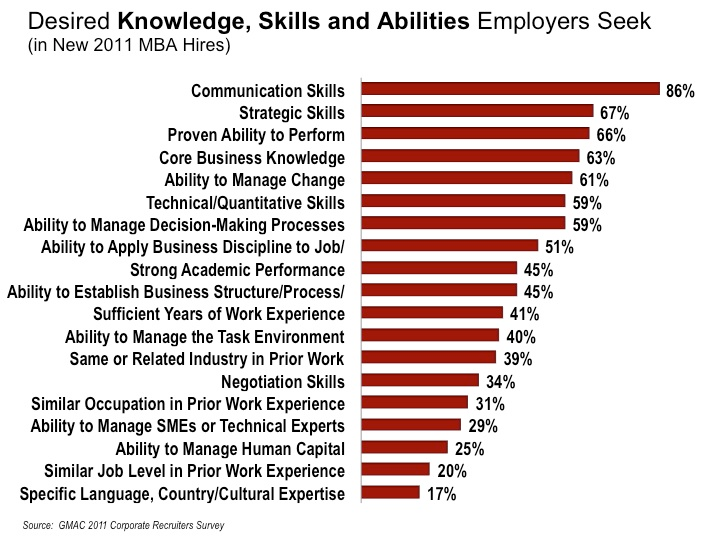

I love the fact that the first three skills are soft skills, one that you really cannot learn from reading a textbook or listening to someone tell you things. They are skills that take time to develop and through multiple experiences and situations. In my opinion inquiry does this. 

Now these are just my opinions but ones that have been grounded in my practise. They are observations of my growth and reflection. Would love to hear your thoughts?

What do you think of inquiry?

Do you like it? If so why?

What are the benefits? Drawbacks?

I would love to hear your opinions.


Monday, 2 June 2014

My 2ndish attempt at using provocations

I would like to think that I teach through Inquiry.  I really try to keep all of my work about the kids and their thinking; however, I do find myself still leading discussions more than I would like.  Then I learned about provocations.  WOW! I know that I have previously blog about this subject but since that time I have tried to use them more.  Today in science I did just that (at least I hope I did).

Here is what I did:

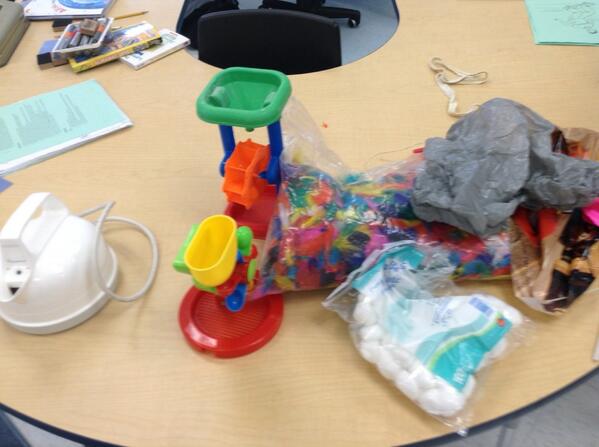
1) I got a bunch of experiments working on air and water

Center 1: AIR


Center 2: Water

Embedded image permalink
(note: some of these items were for other provocations)

Center 3: Water Cycle


Center #4: Pollution


I then broke them into groups had books and iPads at the centers and asked them what do they observe?  Wow, I couldn't believe the talk, the focus, and  the engagement.  Take a look at this shot:


Here the students were so engrossed in what was happening that they didn't even notice me.  They were saying, "cool look its raining!"  They were also using the vocabulary that we have been building before this through our watercraft project.

What did I learn?

1) Inquiry (true inquiry) is allowing planned exploration.  Students really need time to explore and make observations about the subjects.

2) This takes a lot of planning.  I been planning this for some time now (many thanks to my amazing PLN for their help in this).  As I have been planning I had to think about questions, get all of the materials ready and even think about possible misconceptions.

3) True assessment.  I was amazed at what the students had absorbed through previous books, the Watercraft project and our discussions.

4) Its a lot of fun to watch the joy and engagement of true learning

So if you haven't done provocations before, give it ago.  Its a lot of fun and you would be surprised at what you will learn about your students.


Wednesday, 8 January 2014

Geometry

I started this blog to talk about the things I did in my classroom but it has turned into more of ramblings on education; however, this blog post I want to focus on some things that I have been doing in the classroom with my grade twos.  

As I have stated before, I predominately teach through inquiry and problem based learning especially in math.  Rarely, if at all, will you find me lecturing, I just don't think kids want to hear me ramble or that they are really listening. Instead I try to facilitate discussion through activities, problems, projects and carefully planned questions.  However, there are still some subject areas that I have trouble with, geometry is one of them.  The reason I struggle with this is it's sometimes really hard to come up with a context or a problem that allows students to explore the concepts that you are teaching. Not only this, but there is a lot of vocabulary, or social constructs as I like to coin it, that students just need to learn (e.g. The name of a four sided shape is a quadrilateral). Moving to primary has allowed me to shift my thinking nd find more ways to explore these concepts.  I have had to revisit many of my favourite resources, like VanDeWalle, Marilyn Burns and Fosnot. VanDeWalle has an amazing learning progression for geometry in his book.

Here are some of my activities: 

1) concept attainment: yes and no categories

For this activity, I had a bunch of 3D figures or shapes for students to see. I placed one object in the yes and then another in the no. I would then have the students discuss what they think is happening.  I would then place another object in the yes and no category.  Once this was done we would discuss and then I sent them off to try and figure out my rule or concept I was trying to get them to see.  This was great for teaching terms like parallel, shape names (quadrilateral, triangle, prism, pyramid), etcetera.

2) 4 triangle problem

This problem is in numerous resources but I found it in Mariyln Burns book.  For this problem, I gave my students four equilateral triangles and told them they had to make as many different shapes as possible. They then had to organize there shapes.  This was really good for teaching shape names and other various properties.

3) property hunt:

This activity is one that I traditionally do as it lends itself to exploring the various shapes and figures.  For this activity I have the shapes or figures out and the students just try to find as many properties as they can. Normally, I would tell my students what properties they would be looking for or at least brain storm ideas from them.  However, this year I just let them search.  This often would generate lots of questions, which I would then stop the class and have mini congresses ( debriefing).  This would then lead to more questions, exploration and so on.  This change has really opened up my students understanding and has helped me see what the students actually understand versus what they have absorbed.  

4) Make a figure

This particular activity is used for 3D figures but possibly could be modified for 2D shapes.  For this activity I gave my students various shapes and asked them to find what figure they made.  This actually generated some really cool discussions around prisms an d pyramids.

For me inquiry is the best way of teaching but it does have some problems here or there.  I hope that these are useful ideas.  If you have any great lessons you love, please share; would love to hear them.

Tuesday, 20 August 2013

Making conjectures and proving them

In grade two we have been exploring the concept of doubles and what is a double. It's an interesting concept because we probably assume that by grade two students should know what a double is and why it is called a double, but that was not so. Oh of course, all of the kids could count by twos, but when asked what makes a double all I got was blank stares.  With this in mind we went through some problems exploring whAt a double is.  We started with the story of Madeline, see previous post, and then moved to a discussion about where we have seen a double before.

Today, the class looked at pairs of shoes.  The problem was if each person in your house had one pair of shoes in the front hallway, how many pairs would you have and how many individual shoes would you have?

Most of the students drew out the people and then the shoes, they then counted by ones or twos to get the individual shoes. This alone is a good math problem but I decided to take it a step forward. I asked them to look at their results and make theory, so that I could figure out how many shoes I would have for any number of people?  Once they made a theory they had to test t out to make sure it was true.

I was amazed at how many of the students looked puzzled. It was almost like I asked them to fly to the moon. I am amazed every year at how students struggle with thinking. We often say that's we are teaching 21st century skills but are we really?

As I look at what my students eventually did I think how they are starting to become real mathematicians. Sure I could have told them the rule was the amount of people doubled would give you the individual shoes because each person has two shoes or mode the rule with pictures, t-charts and then follow up with a question like, "what pattern do you see?" or i could count the shoes with the kids, but then would my students have learned?

By doing this, this way, I have allowed my students to make their own theories and thentestthem out and prove them to the mathematical community. They have thought about the process, they have looked at the numbers in relation to the context and the math became real.

So I ask you, what are you doing to make your students think?

Tuesday, 21 May 2013

Give kids an inch and they go the mile! Inspiration is the inch!

I have had the privilege of having some amazing classes in my career as a teacher and some very challenging ones as well, but one thing that they both have in common is when given the chance to excel they always do.  One of my favourite units in grade Four is Medieval Times. It's a great era of time that draws in all kinds of interests. Unfortunately, I cannot cover all of the cool facts and interesting things of the era. To solve this, I challenge my students to a "rise to power.”

For this challenge, they are to do a presentation about something they have researched, made, drew, or created about the medieval times. It allows the students to go off and explore topics that are not covered due to time.  The kids absolutely love it. When given the chance to learn and when that learning is appreciated kids excel and go above and beyond.  Yes there may be parent help but shouldn't that be encouraged sometimes. All I know is that when given the chance to excel and show their learning, in an environment that students feel appreciated and engaged, they will rise to the occasion no matter the type of student we have.

Here are a few of the projects:

This is a medical shield project inspired by a students idea on coarse of arms. Students loved it so much they did a whole class project.

This I is a manor house. Not all correct in the representation but learning non-the-less.

Friday, 26 April 2013

Creating Accountable Talk in the Classroom

Accountable Talk is a big passion of mine.  Seeing the results of the students talking is truly amazing.  Here are just some small tid-bits that I compiled to help create accountable talk in the classroom.
Accountable talk just doesn’t happen, no matter what age group you are teaching, you have to create conditions for it.       

1) Students have to feel like they are welcomed (which I know we all do as educators)

2) All voices are heard à this is the hardest part.  We sometimes only chose certain kids to talk

3) At the beginning of the year like many teachers I spend a lot of time on training my students to work in partners, what talk looks like, and sounds like.  We go over rules for partner talking and what my expectations areThis is rough at the beginning of the year.  I often do this through games, not only is this great in primary but it works well in junior.  As you are playing games you are also teaching many of the math concepts and having small conferencing moments with the students. You get great diagnostic assessment and provide formative assessment right on the spot.  For junior I tend not to spend as much time and introduce games every Friday because of how short on time I am and how dense the curriculum is in junior (spend a week if not two though).

There are also talk moves that you can be constantly do:

1)      Wait time: à when students have enough wait time they will participate (this takes time)
§  At the beginning of the year this wait time feels like hours but if you don’t give it then they won’t talk later
§  When you wait the accountability is on them
§  Kids need time to process
§  Add in think pair share here: à great teaching tool to promote talk
2)      Revoice: 
-          When you revoice what the students have said then they feel accountable to the work.  It validates their opinion but at the same time makes them think about what they are talking about
-          You can also have the other students revoice: à this holds other students accountable to contribute to the community and that they have to listen
3)      Just don’t talk:
-          I think that sometimes as teachers (me included) we talk too much
-          I sometimes don’t say anything and then a student jumps in (let it)

Finally talk will not happen if you don’t plan for it to happen.  You must think about what big ideas you are going to be discussing.  They sometimes don’t happen but if you have things planned out you can create questions to lead students back to these ideas or be prepared to discuss what the students are talking about or ready for. 

Saturday, 13 April 2013

Asking Good Questions

Asking questions has always been an important aspect of any teachers job but understanding what makes a great question is the hardest part of the job.  As a teacher we have watched those Professional Development (PD) videos on the classes that seem to be in rich discussion, always learning and having students say such wonderful and impacting statements.  I know I often sat in those said PD sessions and said, " How in the world did that happen?" or "Those students must be the best of the best?"  It wasn't until I watched my own videos up in a PD session that I realized there was more to this then meets the eye.

Part of my research has been to look at how my questions impact the learning of my students understanding in mathematics.  As a secondary question I also wanted to understand how teachers plan in order to ask good questions.  I have noticed three important aspects that may help in asking good questions.

The first is that as teachers we need to plan for good questions and good talk. Discussion just doesn't happen.  We may think that they do but real discussion takes time, just like real learning takes time.  If we want to impact our students learning, we, as teachers, need to plan for it to happen.  The first step is planning meaningful, rich tasks that allow students to explore the concepts.  These tasks need to be open ended and have a real context for all students to access the problem/tasks.  The second step is anticipating students problems, responses and learning.  I often have these mapped out based on my experiences, learning and research into the subject matter.  As a teacher we MUST understand my students learning and we MUST understand the curriculum and concepts being taught.  It is more then just opening a textbook and learning steps or procedures to solve the problem.  When you can identify the problems students may have you are better prepared to give a question instead of directly teaching the concept.

The second aspect of asking good questions is the type of questions that we ask as a teacher.  Often, (and I am included in this) we as students questions that only have one answer, or we just want to check for understanding and move on.  If we want our students to develop deeper understanding our questions have to be focused on learning objects and linked to further explanation of concepts.  For this to happen our questions should: 1) push our students beyond the basic procedural output and into connecting it to conceptual big ideas; and 2) introduce connections to other concepts or subjects.

The final aspect is giving our students wait time to respond.  Often, we expect an answer to a question right away.  This is due to the fact we already have an answer that we are looking for or the question only has one answer to respond too.  When we give our students the time to think they have time to develop an true understanding.  When we rescue our students or go right to direct teaching we rob our students of their understanding and thinking.  In addition, the wait time also allows our quieter students to feel a part of the community and wanting to participate.  It honours their learning.

Asking good questions just doesn't happen.  It takes practise, it takes time and it takes patience.  You will make mistakes but that is okay.  Some times it may seem that you are going backwards in learning but when you sit back and reflect your student's learning, you may just be surprised; I know I have been.

For more information read the following articles:

http://bfc.sfsu.edu/PRIME/OrchestratingDiscussions.pdf

Orchestrating Productive Mathematical Discussions: Five Practices for Helping Teachers Move Beyond Show and Tell.  Mary Kay Stein, Randi A. Engle, Margaret S. Smith, Elizabeth K. Hughes.